
Learning a Language Goes Far Beyond Memorizing Words - Interactive Spanish Learning in Bucaramanga

Updated: Aug 31

One of the biggest challenges when teaching a language and, in fact, any kind of knowledge is understanding that every student learns differently. We all come to the classroom with different strengths: some people have an excellent ear and understand quickly when listening, while others feel more confident writing, reading, or speaking from day one.
As a teacher, one of my priorities is to discover each student’s strongest skill and use it as a starting point for the rest of their learning. Rather than focusing only on difficulties, we build on their strengths to help them progress with greater confidence and ease.
I believe that truly internalizing a language requires more than studying grammar rules. We need to engage all our senses: listening, speaking, moving, observing, and even connecting what we learn with our emotions. It is much easier to remember a word or grammatical structure when we associate it with an experience, a story, or a moment that made us feel something.
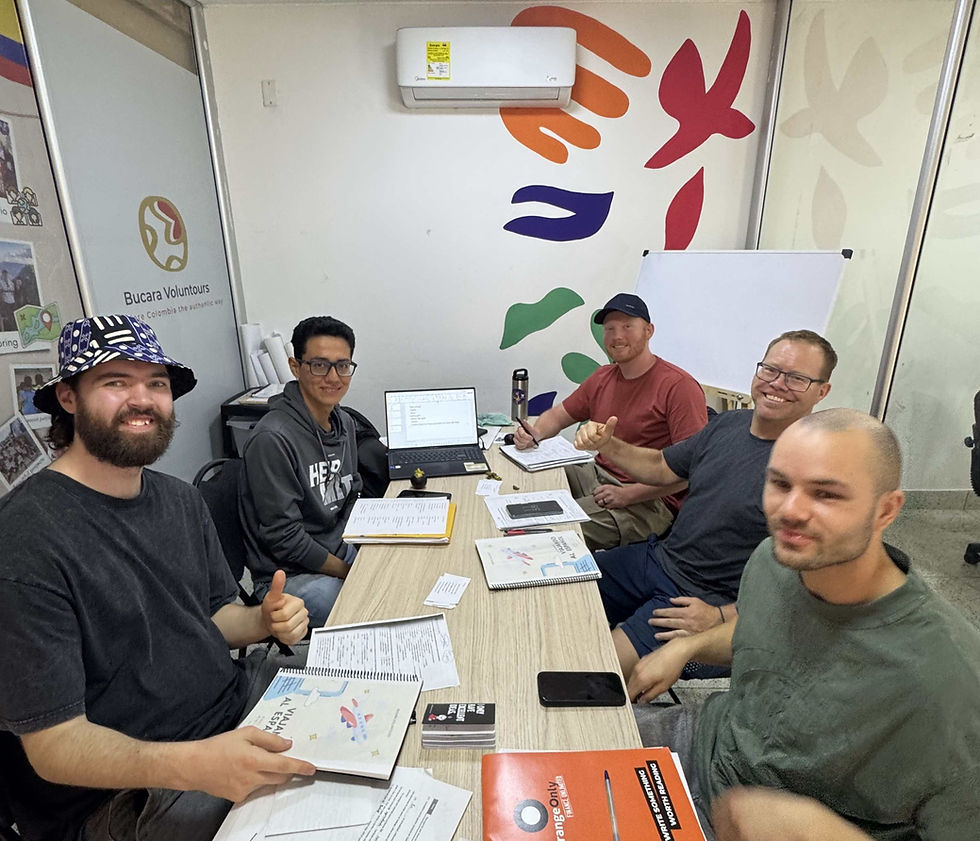
That is why, at Bucara Spanish, we aim to make every class a small immersion experience. We know that not everyone can live a complete immersion experience, but we can create that environment within our classes.
A great example is the difference between the Spanish "preterito" and "imperfecto", one of the topics that often causes the most confusion for Spanish learners. Instead of simply memorizing the rules, we use our bodies to understand them. When telling a story, we stand up, use mime, act out the different actions, and use gestures to distinguish a completed action from a description or an action in progress. In this way, grammar stops being something abstract and becomes an experience that students can remember more easily.
Music also plays an important role in our classes. It helps us train our listening skills, expand our vocabulary, and discover real expressions used by native speakers. Little by little, different senses become involved at the same time in the learning process.
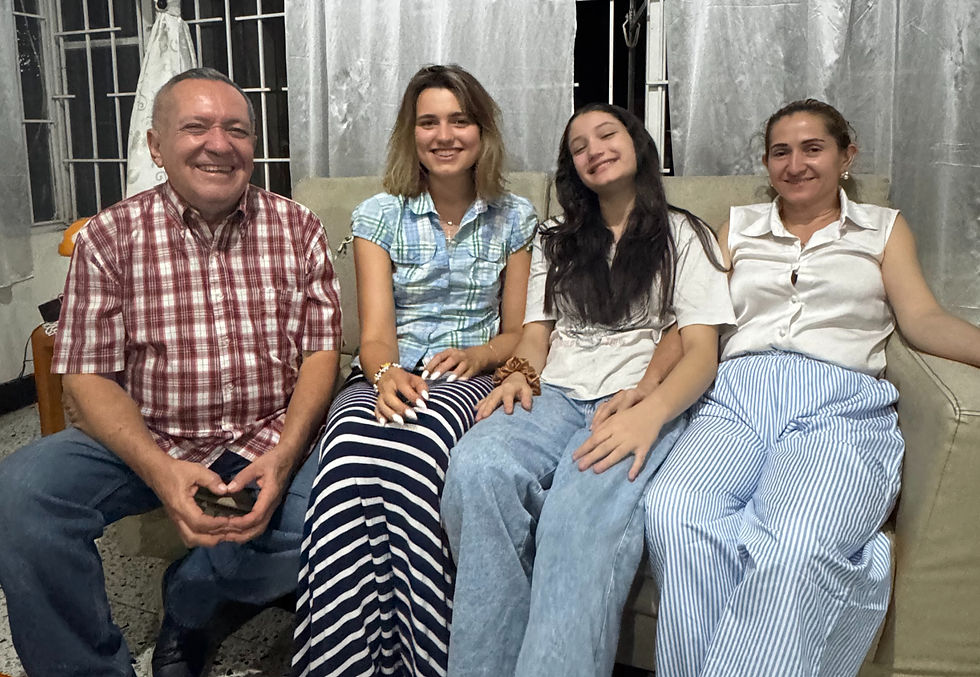
But there is something I enjoy even more than teaching grammar or vocabulary: sharing my language and culture. I love making the classroom a space where we can have conversations, tell stories, laugh, discover different perspectives, and build a genuine connection. Over time, many of my students stop being just students and become friends with whom I share experiences and learning.
Ultimately, learning a language is not simply about speaking a new language. It is about creating connections: with people, with culture, and with ourselves. When learning is interactive, meaningful, and human, the language stops feeling like an obligation and begins to become part of our lives.
And that is precisely how we love to teach at the Bucara Spanish Academy - Your interactive Spanish Learning Experience in Bucaramanga.

Comments